Cha Dao, the way of tea, is one of the oldest living practices on earth. It rests on four principles: he, jing, yi, zhen. Peace, quiet, enjoyment, truth. Monks carried it into their monasteries as medicine, the thing that made long meditation possible. Shen Nong, the father of Chinese medicine, is said to have named tea the king of medicinal herbs more than two thousand years ago.
There's an elemental alchemy in preparing tea. Fire to heat the water. Earth in the leaf. Metal in the vessel. Water as the carrier. Wood as the living plant it began as. Five elements, one bowl.
Tea and the warrior
During Japan's Warring States period, centuries of clan warfare, something extraordinary happened. Rival warlords would pause their battles, enter the tearoom, leave their weapons at the door and kneel, equally, together.
The ceremony asks the same of everyone: humility, attentiveness, presence. Aggression has no seat at the table. Sen no Rikyū, the great tea master of that era, said it plainly: tea is peace in practice.
The Chinese emperors understood it too. Tea was gifted between dynasties, traded along the Tea Horse Roads and offered to rivals before negotiation. To share tea was to say: I am here, I am listening and for this moment we are the same. It still works that way.
One plant, every expression
All true tea comes from one species, Camellia sinensis. What changes is the climate and what happens after picking: how long the leaf oxidises, whether it's steamed, fired, rolled, aged or fermented. Time, heat and human hands turn the same leaf into entirely different teas.
They all share antioxidant polyphenols and catechins, plus L-theanine, an amino acid found almost nowhere else in nature that's linked with calm, alert focus. Awake without the edge.
The five elements, the five teas
In Traditional Chinese Medicine, the body is understood through five elements, each linked with an organ system and each with a tea that speaks to it.
- Wood · green tea · the Liver. Fresh and alive. The element of spring and new growth, of things moving again after stillness.
- Fire · red and black tea · the Heart. Warm, robust and sustaining. The element of summer and the heart in full expression.
- Earth · oolong · the Spleen. Balanced between worlds, neither green nor black. The element of transition, harvest and integration.
- Metal · white tea · the Lungs. Light, delicate and clean. The element of autumn, of breath and letting go.
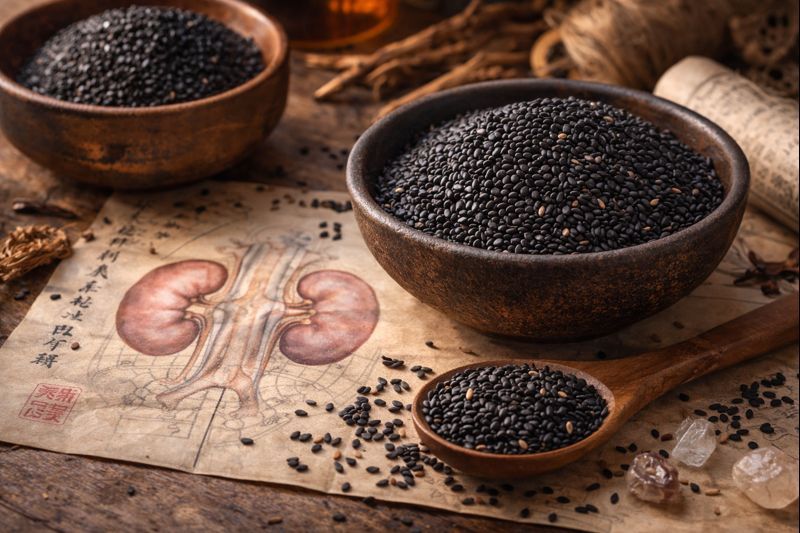
- Water · pu-erh · the Kidneys. Rich, deep and fermented. The element of winter, of stillness and what endures.
When I drink each one
White, in the early morning or before sleep. The youngest bud, barely touched, faintly sweet and almost floral. Low in caffeine and gentle when the body wants softness over stimulation.
Green, mid-morning. Stopped mid-transformation to hold everything intact. It wakes the senses without disturbing them. Matcha lives here but apart: the whole leaf ground to powder, so you take in the entire plant. It was the tea of Zen monks in long zazen, holding them in stillness for hours. Matcha before movement or creative work is its own ritual.
Oolong, in the early afternoon. Partially oxidised, light and floral at one end, roasted and deep at the other. It's different with every steep. It steadies what tends to drop after midday and eases the shift from doing into being.
Black, in the morning with food. Fully oxidised, dark, malty and sustaining. The tea most of us grew up on, often drunk without presence. Strong enough to anchor you into the day and warming in the luteal phase.
Pu-erh, after a heavy meal or in the evening. After processing it ferments again, for months, years, sometimes decades. Smooth and earthy, like the forest floor after rain. Aged pu-erh becomes mellow enough to drink late. Some are aged over fifty years; to drink them is to drink time itself.
And the ones that go a little deeper
The more I learn about tea, the more absurd it seems to call it simply tea. One plant and an entire universe.
Yellow tea, the rare middle way. Huang cha is one of China's rarest traditions. It begins like green tea, then the warm leaves are wrapped and left to yellow slowly in their own heat and moisture. The grassy sharpness softens into something rounder, sweeter and mellow. Patience in a cup.
GABA tea. Freshly picked leaves are kept in an oxygen-free environment, where they naturally build up much more GABA, one of the body's calming neurotransmitters. We still don't fully understand how much of the experience comes from GABA itself and how much from L-theanine, caffeine and the rest of the leaf's chemistry. Which feels very tea to me. We keep trying to isolate the magic when perhaps the intelligence is in the whole.
Rock tea, the mountain in the leaf. Yancha comes from the Wuyi Mountains of Fujian. It belongs to the oolong family, but a beautiful rock tea is something else entirely. The bushes grow among cliffs, ravines and weathered mineral rock. The roasted leaves can be deep, mineral, floral, woody and smoky. The great rock teas are spoken of through yan yun, "rock rhyme": less a flavour than a sensation that stays in the mouth and throat after the tea has gone.
Perhaps this is what tea keeps teaching me. The leaf is only the beginning. Mountain, oxygen, fire, moisture, time and the hands of the maker all arrive in the bowl.
The ritual
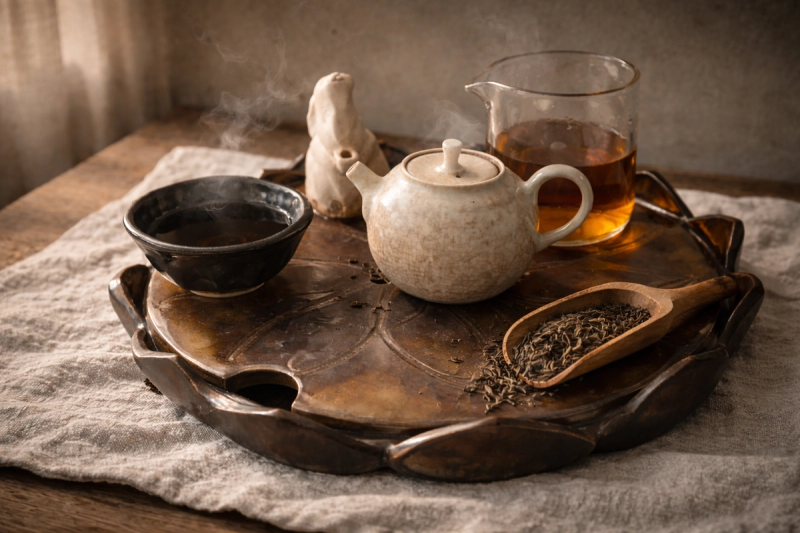
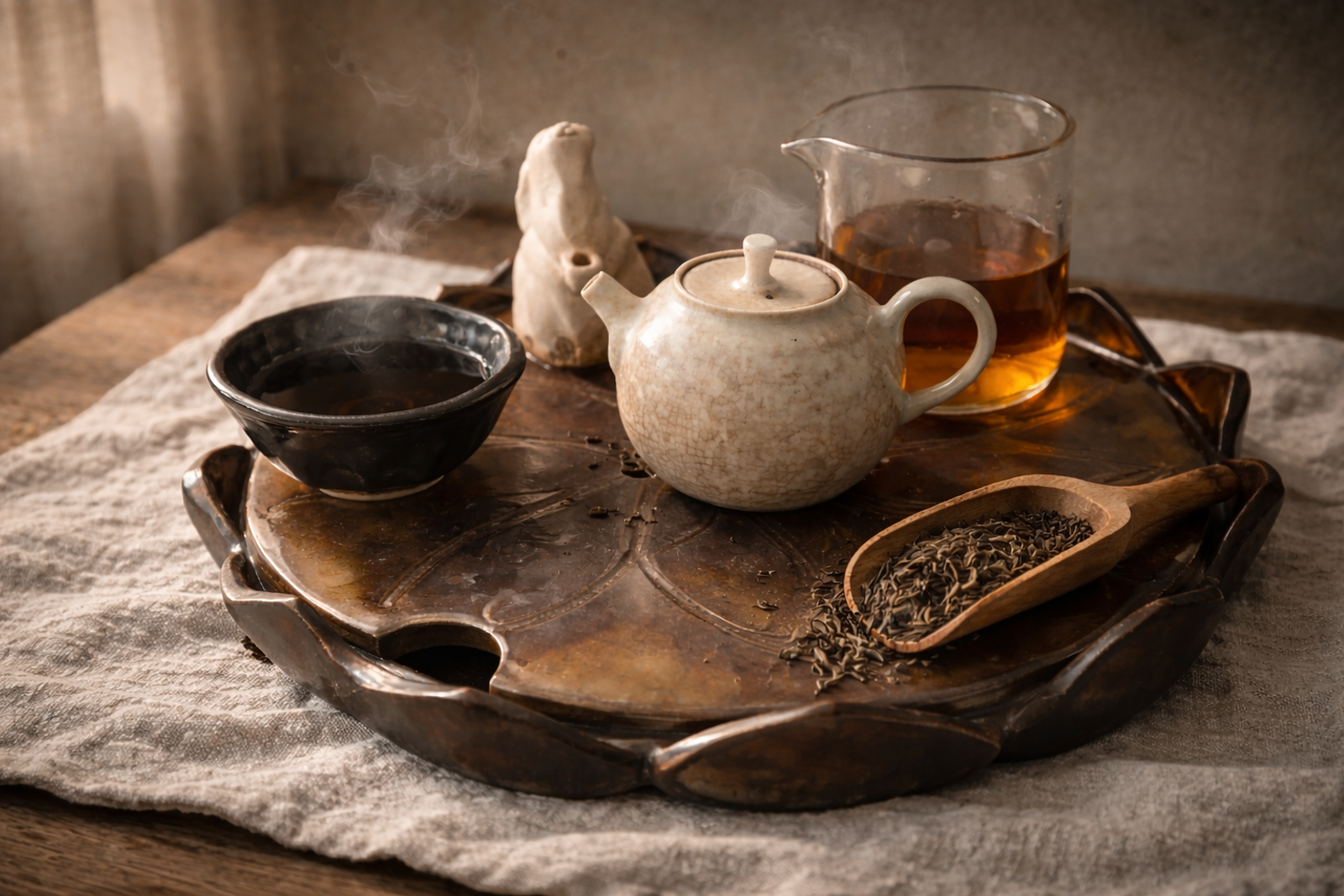
You don't need a teacher, a ceremony or the right vessel. Water, a leaf and the willingness to be present for what happens between them. Hold the bowl in both hands and feel the warmth before the first sip.
Cha Dao was never about doing tea correctly. It's about using tea as a doorway into the body and into the quiet that has always been there. Every cup an offering: to the plant, to the lineage, to yourself.
With love,
Lauren